Program & Speakers
Meet our speakers
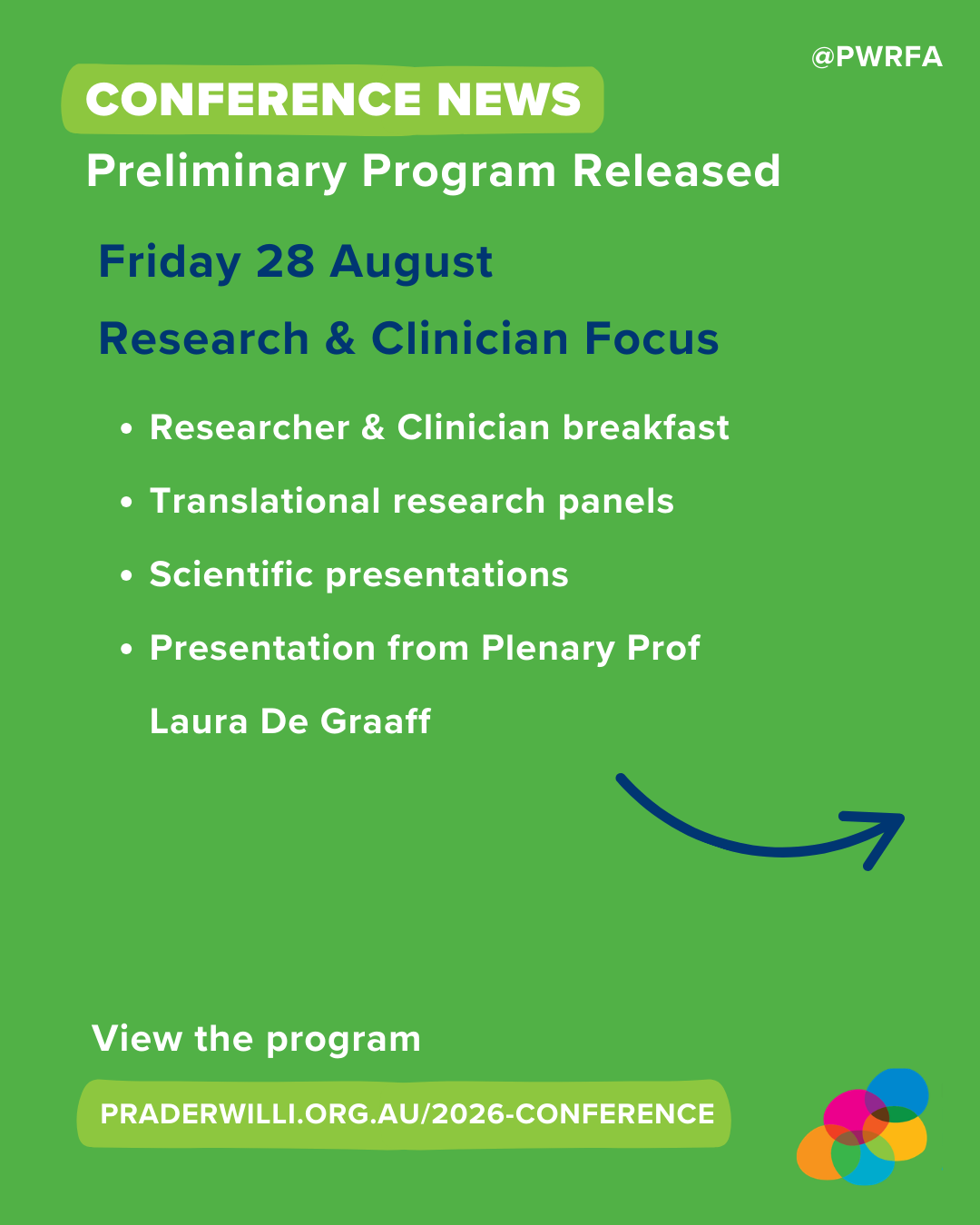
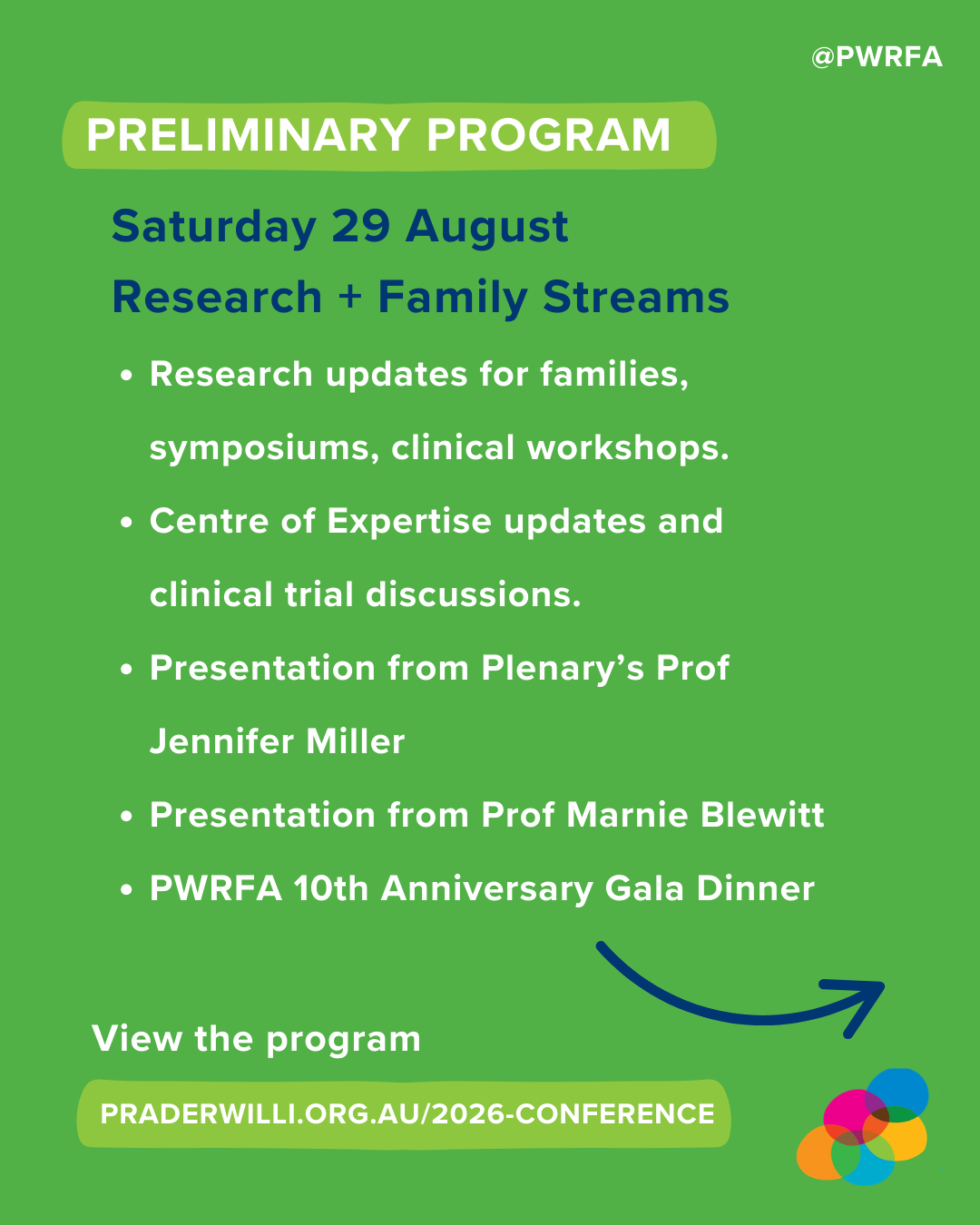
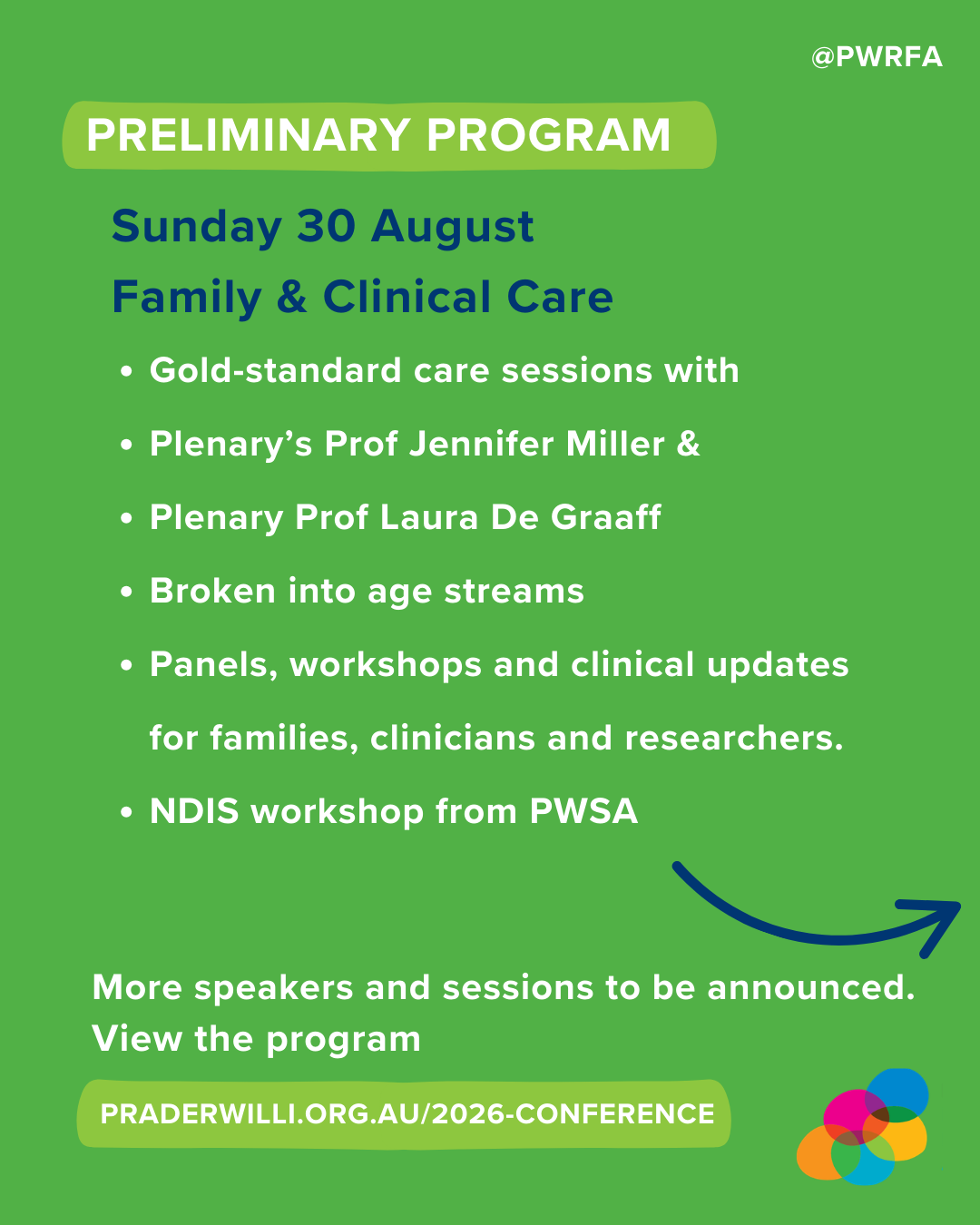
The 2026 PWS Research and Family Conference brings together researchers, clinicians, allied health professionals, service leaders, and advocates from across Australia and around the world. Below you will find our plenary speakers, followed by our full speaker list grouped by session stream.
Plenary speakers
Plenary speakers
Keynote addresses from leading voices in Prader-Willi syndrome research and care.
JM Professor Jennifer MillerUniversity of Florida, United States
Plenary session
Professor Miller is a Professor of Paediatric Endocrinology at the University of Florida and has worked with people living with Prader-Willi syndrome and other forms of hypothalamic dysfunction for more than 20 years. Her research focuses on understanding hyperphagia and developing clinical treatment trials for people of all ages affected by hypothalamic obesity and hyperphagia.
LG Associate Professor Laura de GraaffErasmus MC Rotterdam and Radboud University Medical Center, the Netherlands
Plenary session
A/Prof de Graaff is Associate Professor of Genetic and Developmental Endocrinology and founder of the Center for Adults with Rare Genetic Syndromes, where a multidisciplinary team supports more than 1,600 adults living with rare genetic syndromes. She co-founded and heads the adult department of the Dutch centre of reference for PWS, which has supported more than 210 adults living with the syndrome.
Her research includes the effects of growth hormone treatment on cellular ageing in adults with PWS, and she co-chairs the Adults with Intellectual Disabilities subnetwork within the European Reference Network ERN-ITHACA.
TH Professor Tony HollandUniversity of Cambridge, United Kingdom
Plenary session
Professor Holland is one of the world's most respected voices in Prader-Willi syndrome research, care, and advocacy. As former President of the International Prader-Willi Syndrome Organisation, his work has helped strengthen global collaboration, improve understanding of PWS, and support better outcomes for people living with PWS and their families.
With decades of experience in psychiatry and research, Professor Holland has made a significant contribution to how families, clinicians, and researchers understand the behavioural and mental health aspects of Prader-Willi syndrome.
MB Professor Marnie BlewittWalter and Eliza Hall Institute of Medical Research
Plenary session, details to be confirmed
[BIO TO BE CONFIRMED. Professor Blewitt has not submitted a speaker and abstract form, so this placeholder needs her approved bio, session title, and headshot before the page goes live.]
Research & Discovery
Cutting-edge scientific findings, emerging research methods, and collaboration opportunities.
DG A/Prof David Godler and Dr Shokouh ShahrokhiMurdoch Children's Research Institute
Unlocking Prader-Willi syndrome: peripheral and brain multi-omics reveal new disease mechanisms and targets for intervention
A/Prof David Godler leads the Diagnosis and Development Laboratory at MCRI, combining omics technologies, population-scale cohort studies, and deep clinical phenotyping to improve outcomes for children and families living with rare diseases. In collaboration with PWRFA and the Foundation for Angelman Syndrome Therapeutics Australia, he established Australia's first chromosome 15 imprinting disorders biobank.
Dr Shokouh Shahrokhi is an early career researcher at MCRI whose doctoral work applied advanced multi-omics approaches to peripheral and brain tissue from people living with PWS, seeking blood-based biomarkers linked to brain-related changes and clinical severity across the lifespan. Her current work explores molecular pathways linked to behaviour and appetite regulation, and existing medicines that may be suitable for repurposing.
AL Dr Anna Le FevreWalter and Eliza Hall Institute of Medical Research
Targeting SMCHD1 as gene activation therapy for Prader-Willi syndrome
Dr Le Fevre is a consultant clinical geneticist and paediatrician completing a PhD with Professor Marnie Blewitt at WEHI, alongside her clinical work with the Victorian Clinical Genetics Service. Her research explores the epigenetic regulator SMCHD1 as a potential target for activating genes on the maternal allele at the Prader-Willi syndrome locus.
AT Dr Andrew Chi-Pang TaiPerron Institute for Neurological and Translational Science
Advancing therapeutics and deciphering disease mechanisms in Prader-Willi syndrome
Dr Tai is a biomedical researcher focusing on PWS and related chromosome 15 imprinting disorders. His work combines patient-derived induced pluripotent stem cell models with RNA sequencing to investigate disease mechanisms and identify therapeutic targets, and he is developing antisense oligonucleotides aimed at correcting gene dysregulation in PWS. His research is supported in part by a PWRFA grant.
DL Dr Dilys LamHarry Perkins Institute of Medical Research, The University of Western Australia
Building a toolkit for precision control of gene expression
Dr Lam is an early career postdoctoral researcher whose work focuses on discovering and characterising tools that can precisely activate or silence specific genes by modifying the epigenome, the layer of regulation that controls how genes are read, without changing the underlying genetic sequence. Their work supports the development of new strategies for reprogramming gene expression.
SA Dr Sandro F. AtaideSchool of Life and Environmental Sciences, The University of Sydney
Next generation of gene insertion technology: seekRNA
Dr Ataide is a Senior Lecturer in Structural Biology whose laboratory investigates the mechanisms of non-coding RNAs and RNA-protein complexes. His team recently described the programmable seekRNA system, a transposon-derived, RNA-guided DNA integration platform with the potential to deliver substantially larger DNA cargoes than current gene-editing technologies.
LO Associate Professor Lotta OikariQIMR Berghofer
Combining computational approaches and disease-specific stem cells to achieve drug repurposing for rare neurological disorders
A/Prof Oikari is a Senior Research Officer at QIMR Berghofer with adjunct appointments at QUT and the University of Queensland. She has driven research using patient-derived induced pluripotent stem cells to model neurodegenerative conditions, and is now developing approaches to investigate drug repurposing for rare childhood disorders, including Prader-Willi syndrome.
MA Dr Mohammed AlshawshMonash University and Murdoch Children's Research Institute
Should newborn screening for Prader-Willi syndrome be implemented? Evidence, opportunities, and challenges
Dr Alshawsh is a Senior Research Fellow at Monash University and an Honorary Fellow with the Epi-Genomic Newborn Screening program at MCRI. He has extensive expertise in evidence synthesis, systematic reviews, and meta-analysis methodology, and has published more than 110 peer-reviewed articles.
MJ Dr Morgan JamesBrain and Mind Centre, The University of Sydney
Towards an orexin therapeutic for Prader-Willi syndrome
Dr James is a Horizon Fellow whose laboratory examines the neural basis of conditions associated with dysregulated motivation. He also leads a drug discovery program designed to translate basic science findings into potential new treatments, funded by the NIH, the NHMRC, and several private foundations.
Clinical Practice & Allied Health
Best practice guidelines, treatment innovations, and tools for GPs, therapists, and educators.
HV Harold J.P. van Bosse, MDCatholic Health Services and Good Samaritan Hospital, United States
Musculoskeletal issues of Prader-Willi syndrome: a few things to know
Dr van Bosse is a paediatric orthopaedic surgeon with a 25 year relationship with the PWS community. He has published on the non-surgical treatment of scoliosis in infants with PWS and on hip dysplasia, and sits on the clinical and scientific advisory boards of IPWSO and PWSA USA.
His session covers orthopaedic challenges including delays in milestones, flexible flat feet, hip dysplasia, and spine deformities, with a focus on the least invasive approaches for very young children that aim to preserve spinal growth and chest development.
YC Associate Professor Yoon Hi ChoThe Children's Hospital at Westmead
Puberty in PWS
A/Prof Cho is a paediatric endocrinologist and Senior Staff Specialist at The Children's Hospital at Westmead, and Clinical Associate Professor at the University of Sydney. She specialises in endocrine care for children and adolescents living with PWS and is a principal investigator in international PWS clinical trials.
ON Dr Ohn NyuntQueensland Children's Hospital
Central hypoadrenalism in Prader-Willi syndrome
Dr Nyunt is a paediatric endocrinologist working at Queensland Children's Hospital and Metro North Hospital and Health Service, with experience in diabetes mellitus, Prader-Willi syndrome, and general paediatric endocrinology. His PhD is in Prader-Willi syndrome, and he holds academic appointments at the University of Queensland and UNSW.
TM Clinical A/Prof Tania MarkovicRoyal Prince Alfred Hospital and The University of Sydney
Gastrointestinal transit and safety of tirzepatide in people with Prader-Willi syndrome
A/Prof Markovic is Director of the Metabolism and Obesity Service and a senior staff specialist in the Department of Endocrinology at Royal Prince Alfred Hospital. For two decades she has worked in a clinic specifically for people living with Prader-Willi syndrome and neurodiverse conditions associated with obesity.
KO Professor Keith OoiUNSW and Sydney Children's Hospitals Network
GI health in PWS panel
Professor Ooi is Professor of Medicine in Paediatrics and Child Health at UNSW and a Consultant Paediatric Gastroenterologist at Sydney Children's Hospital, Randwick, where he heads the Gastroenterology Department. His clinical interests include chronic childhood conditions with associated gastrointestinal complications.
HH A/Prof Helen (Honey) HeusslerChildren's Health Queensland
National Virtual Centre of Expertise
A/Prof Heussler is Medical Director of Child and Youth Community Health Services at Children's Health Queensland, with training spanning paediatrics, genetics, psychiatry, and sleep medicine. She is medical chair of the PWS Virtual Centre of Expertise and led the establishment of the Centre for Clinical Trials in Rare Neurodevelopmental Disorders.
VP Dr Vinita PrasadChild Development, Queensland Children's Hospital
Developmental assessments for a child with Prader-Willi syndrome
Dr Prasad is a Developmental Paediatrician who works across the Prader-Willi syndrome clinic and several other rare genetic neurodevelopmental disorder clinics at Queensland Children's Hospital. She is a sub-investigator in research into rare genetic neurodevelopmental conditions and an examiner for the Royal Australasian College of Physicians.
SS Dr Solomon ShatanandaQueensland Health and SJP Psychiatry
More than food: understanding the emotional, mental health, and behavioural world of Prader-Willi syndrome
Dr Shatananda is a dually trained consultant psychiatrist in child and adolescent psychiatry and lifespan intellectual and developmental disability psychiatry, working with the Mental Health Intellectual and Developmental Disability Service at Gold Coast Health. He takes a neuro-affirming, strengths-based, and family-centred approach, with a particular interest in supporting the transition from childhood to adulthood.
MJ Dr Melanie JohnstonQueensland Centre of Excellence in Intellectual Disability and Autism Health
Asking the right question: a co-designed mental health assessment tool for people with intellectual disability
Dr Johnston is a consultant psychiatrist providing clinical leadership for the statewide service. She develops education for health professionals on adapting healthcare for people with intellectual and developmental disability, and contributes to clinical research aimed at improving health outcomes.
MP Dr Maryssa PortelliRoyal Prince Alfred Hospital
Session title to be confirmed
Dr Portelli is a Staff Specialist Psychiatrist with the Prader-Willi Clinic and Head of Department for the Emergency Psychiatry Service at Royal Prince Alfred Hospital. She specialises in intellectual and developmental disability and provides psychiatric assessment, treatment, and coordinated care for people living with Prader-Willi syndrome.
VS Dr Vishal SaddiSydney Children's Hospital and UNSW
Session title to be confirmed
Dr Saddi is a Staff Specialist in Sleep Medicine at Sydney Children's Hospital and a General Paediatrician at Bankstown-Lidcombe Hospital, and a Senior Conjoint Lecturer at UNSW. His clinical and research interests span sleep and respiratory medicine, and he is a member of the Australasian Sleep Association.
NV Natalie VosThe Mars Clinic and Active Rehabilitation Physiotherapy
Physiotherapy management of constipation in children with PWS
Natalie is a Senior Physiotherapist and Site Team Leader with a special interest in paediatric continence. She works closely with families to achieve meaningful, long-term outcomes, and is known for explaining complex conditions in a way that builds understanding and confidence.
AP Dr Ashleigh ProwseQLD Scoliosis & Spine Clinics
Panel contributor
Dr Prowse is a Doctor of Physiotherapy with particular expertise in the clinical management of scoliosis in children, adolescents, and adults. She is a member of the International Society on Scoliosis Orthopaedic Rehabilitation and Treatment, and has published on the assessment and conservative management of scoliosis in the European Spine Journal and the World Journal of Orthopaedics.
NS Professor Nora ShieldsLa Trobe University
Supporting people with PWS to exercise: launch of an online training resource
Professor Shields is deputy director of the Olga Tennison Autism Research Centre. Her research aims to improve the health and wellbeing of people with disability by supporting their participation in community-based physical activity.
KL Kathleen Le MarquandSenior Genetic Counsellor and advisor to Genetic Alliance Australia
Ask the genetic counsellor: beyond the Prader-Willi diagnosis and the questions that come after
Kathleen is a certified genetic counsellor with extensive experience across general and prenatal genetics in both public and private settings. She chairs the Professional Issues for Genetic Counsellors group and the Professional Concerns and Complaints Committee for genetic counsellors in Australasia, and teaches in the UTS Genetic Counselling Masters course.
Innovation & Future Directions
Advances in technology, clinical trials, and new approaches shaping the future of care.
TL A/Prof Timo LassmannThe Kids Research Institute Australia
Let AI do the work, not the thinking
A/Prof Lassmann leads the Precision Health Theme at The Kids Research Institute Australia. He has pioneered the repurposing of large-scale omics datasets to accelerate diagnosis and uncover mechanisms in childhood cancers and rare diseases, and his group applies explainable AI models to paediatric challenges with a focus on transparent, trustworthy guidance.
MD Michael DuhigChildren's Health Queensland
Panel contributor
Michael is an educational and developmental psychologist and Clinical Research Manager of the Centre for Clinical Trials in Rare Neurodevelopmental Disorders at Queensland Children's Hospital, with an adjunct appointment at the University of Queensland. His research interests include developmental disability and child and youth mental health.
TK Tessa KeltonLittle Titans
Clinical trials panel, and Reforms to the NDIS: what we can expect
Tessa is Owner and Director of Little Titans and has worked as a Support Coordinator for more than three years, with a detailed understanding of NDIS legislation, policy, and funding. A registered nurse with postgraduate qualifications in emergency care and wound care, and a Master of Professional Accounting, she is developing a budget-forecasting tool to help participants, plan nominees, and providers manage plan funding.
Family Empowerment & Advocacy
Practical workshops on navigating services, building networks, and amplifying lived experience voices.
DP Dr Destiny PachaEmpowerED Solutions, United States
Beyond behaviour: understanding executive functioning in PWS
Dr Pacha is President of EmpowerED Solutions, providing educational consulting, resources, and training for families and professionals supporting children living with PWS. She is a faculty member at The Chicago School of Professional Psychology, co-author of Prader-Willi Syndrome: A Primer for School Psychologists, and author of It Starts With Hello: Katie's Story About Prader-Willi Syndrome, the first children's book published about PWS.
SW Stacy WardPrader-Willi Syndrome Association USA
Session title to be confirmed
Stacy is Chief Executive Officer of PWSA USA, leading national efforts to support people living with Prader-Willi syndrome and their families through advocacy, education, and support. A Board Certified Behavior Analyst and Certified Positive Leader, her work focuses on translating behavioural science into practical, compassionate solutions.
SS Dr Shannon SchedlichSiblings Australia
Siblings and the "glass child"
Dr Schedlich is Chief Executive of Siblings Australia, bringing together professional expertise and lived experience across community development, disability, and government. She brings people with lived experience into the heart of program design, co-creating initiatives that are evidence-based, inclusive, and responsive to community needs.
MS Maddison SmithUniversity of New South Wales
A new program to support siblings of people with complex conditions in Australia: SIBS-ONLINE
Maddison is a PhD candidate and Research Assistant in the Faculty of Medicine and Health at UNSW, and a Research Officer at St Vincent's Hospital Sydney. Her doctoral research focuses on how to support the psychosocial wellbeing of siblings of people living with complex, rare conditions.
MA Michelle AlfordThe Orange Hive
Life after school panel
Michelle is Founding Director of The Orange Hive, a boutique NDIS provider specialising in transition supports, building independence, and developing capacity for people living with PWS. With more than 35 years across government, non-government, and community services, she led the development of Victoria's first specialist accommodation service for people living with Prader-Willi syndrome.
NG Neil GumleyThe Orange Hive
Transition to Supported Independent Living
Neil has worked in the disability sector since 2007 and provided direct leadership for Melbourne's first specialist supported accommodation service for adults living with PWS. He served on the board of Prader-Willi Syndrome Victoria for six years, was Australia's Caregiver Delegate to the International Professional Providers and Caregivers Organisation, and was elected to its board in 2019.
MJ Malcolm JacksonPrader-Willi Syndrome Australia
Session title to be confirmed
Malcolm is Treasurer of Prader-Willi Syndrome Australia and the father of Molly, 24, who lives with Prader-Willi syndrome and moved into Supported Independent Living in December 2024. He brings more than 25 years of senior commercial leadership in the pharmaceutical industry, with a focus on rare and specialty disease therapies, alongside lived family experience of the transition from the family home to SIL.
PH Phil Hayes-BrownWallara Australia
Session title to be confirmed
Phil has been CEO of Wallara since 2010, following a career across investment banking, commercial law, and sports marketing. Under his leadership Wallara has grown into a leading disability and social enterprise organisation employing around 600 people, 45 per cent of whom identify as people with disability. He is an Adjunct Professor (Research) at Monash University and a National Board Member of National Disability Services.
Download the Abstract book here